SkillSwap – A Community-Driven Learning Platform
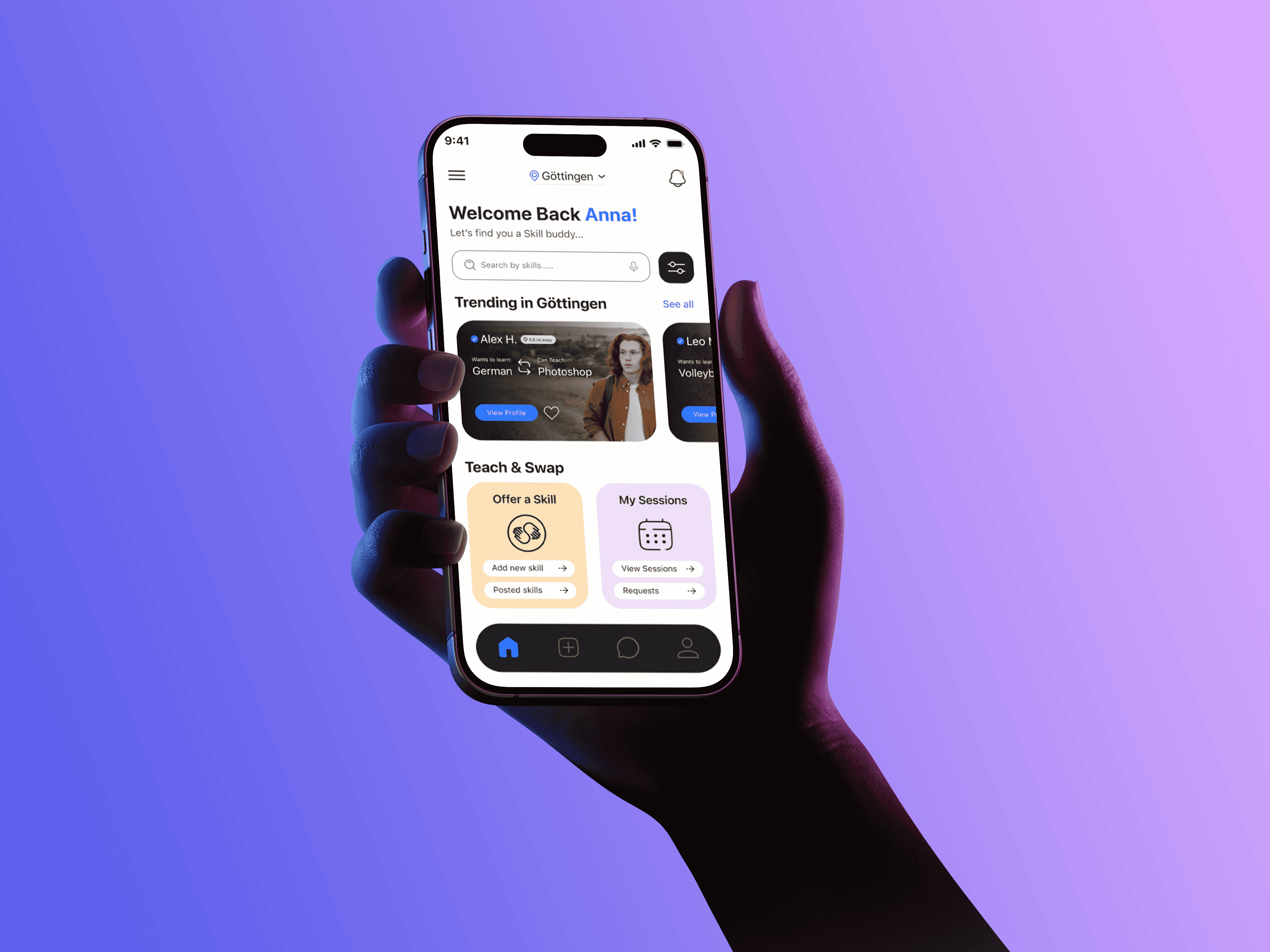
SkillSwap was born out of the idea that skills are meant to be shared. Built during a collaborative project sprint, this app enables people to exchange knowledge — whether it’s yoga, guitar, UX design, or language skills — without financial barriers. It’s a practical, purpose-driven product crafted for students, hobbyists, and lifelong learners.
Project Overview:
SkillSwap is a mobile-first app concept that allows people to learn and teach skills like yoga, cooking, or coding through peer-to-peer interactions. Sessions are matched based on availability, interest, and language preferences, encouraging active community participation.
Background:
This project was part of my Master’s in User Experience Management & Design, where we tackled real-world design problems using structured methodologies. The goal was to create a meaningful platform that empowers individuals to teach what they know and learn what they need—without financial or geographic barriers.
Brief/Challenge:
This was a solo project, where I led everything from ideation to high-fidelity prototyping:
UX research
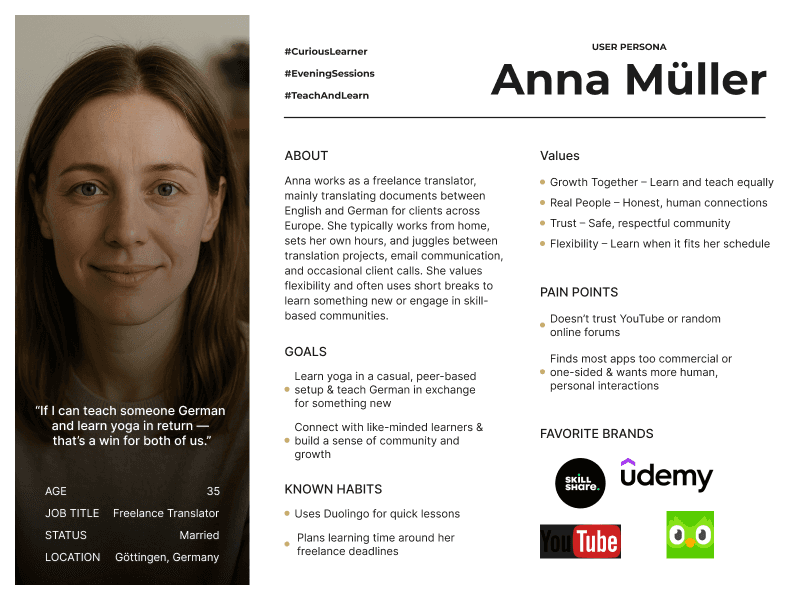
Persona development
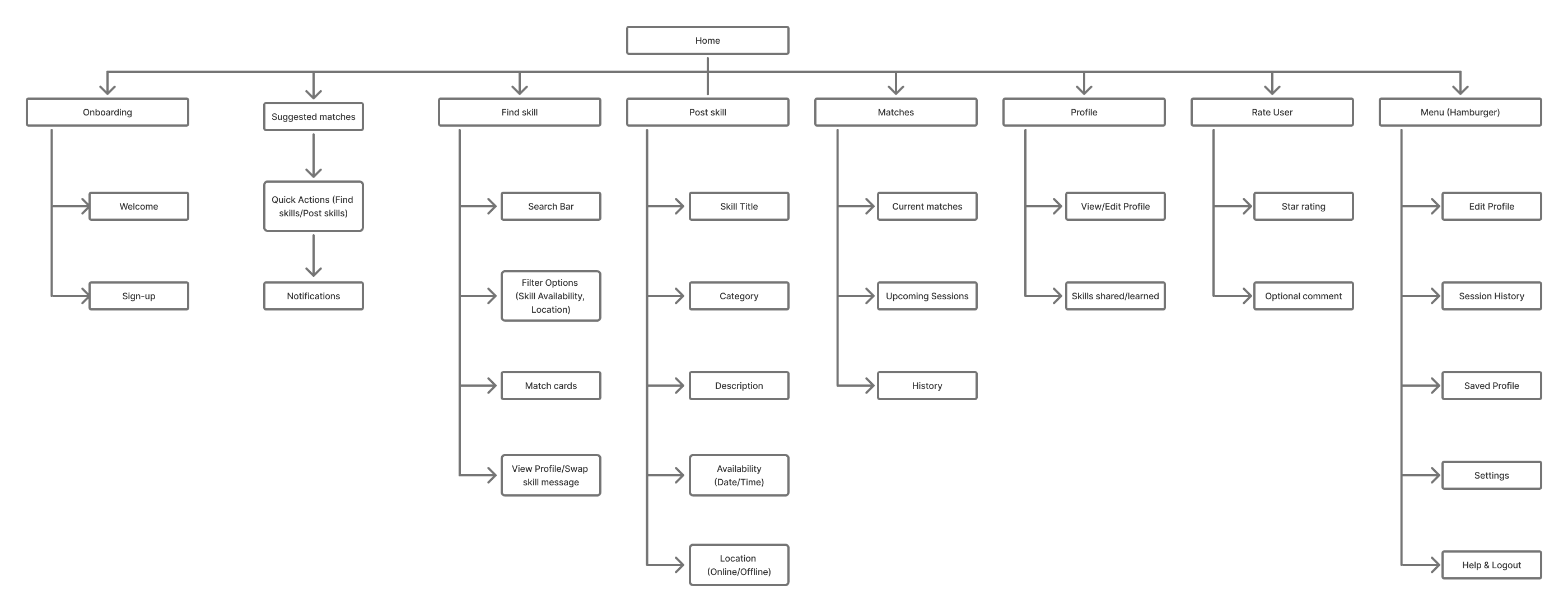
User flow design
Wireframing
UI design
Usability testing
Final storytelling and documentation
Design Brief:
Design a mobile learning platform that is:
User-friendly for both learners and teachers
Trust-oriented, especially in peer-based interactions
Scalable, allowing for future feature additions like community events or live group sessions
User & Business Goals
User goals: Easily find someone to learn from or teach without friction or awkwardness
Business goals: Encourage recurring usage, social interaction, and personal empowerment
Design Thinking Approach:
Discover → Define → Design → Test → Deliver
Research & Insights: I began with lightweight contextual interviews and job story mapping to gain a deeper understanding of motivations and pain points.
Key findings:
Users loved the idea of mutual teaching but worried about reliability
Availability and language compatibility were major concerns
Trust needed to be built before committing to a session
Job Stories (Examples):
“When I’m free in the evening, I want to find someone to teach me yoga so I can use my time well.”
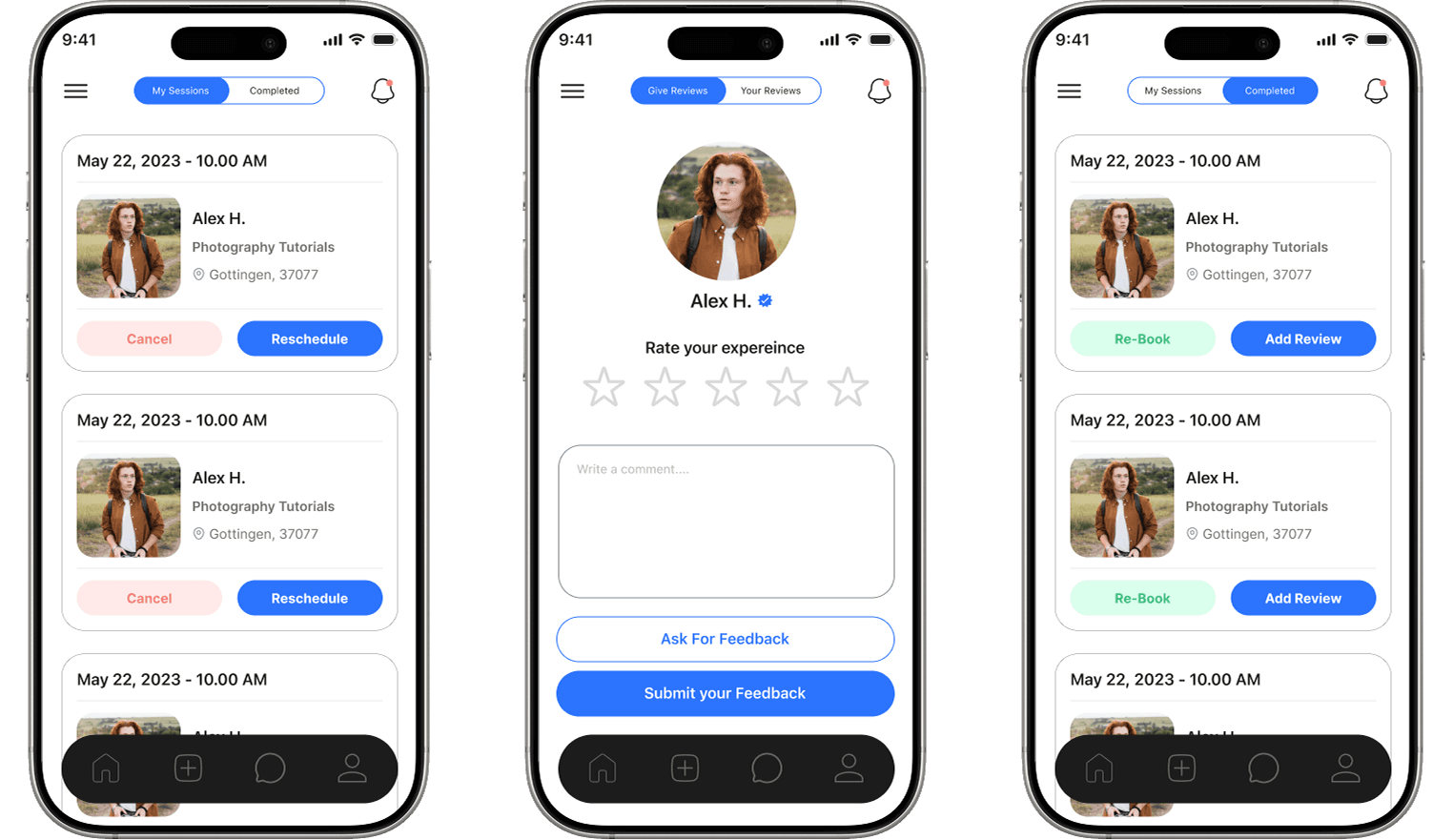
“After a session, I want to track what I’ve learned and rate my peer to ensure a good experience for others.”
Ideation & Design Exploration: Real-time calendar sync with dynamic filtering (time, language, skill type)
In-app chat before confirmation to allow trust-building
Modular skill cards with quick actions: Book, Message, View Profile
Design Decisions:
Dual onboarding: Users select both what they want to learn and what they can teach
Trust-centred flow: Profiles show completed sessions, ratings, and availability
User control: Flexible accept/reject functionality for incoming requests
Session history: Helps users track progress, repeat sessions, or rebook favourite partners.

Learnings & Reflection
Designing for dual user roles (learner and teacher) meant solving mirrored problems—but it also offered opportunities for deeper engagement and empowerment. This project helped me grow in:
Service design thinking
Clarity in UX flows
Designing for trust in peer-based systems
It was a valuable exercise in balancing functionality with emotional design—while staying grounded in what real people actually need.